Writers living in Japan

Recently I’ve been living at Tenjinyama Art Residency in Sapporo, in the North of Japan, Hokkaido.

Coming from Taipei, the transition was immediate; the heat and humidity of Taipei contrasted with what can only be described as ‘wintery conditions’. It became apparent from my wanderings around Sapporo that the Winter serves as a Skiing Destination. What I didn’t expect, however, was how cold it was as late as June, with snow still showing on the peaks of Mount Asahidake.

Mount Moiwa at 500 ft. Hokkaido is famous for its landscapes and rugged outdoor beauty

The Residency has a good mixture of local and international artists. As well as a Korean visual artist and painter, there are two writers, an Australian Printmaker and a charismatic Mexican painter & photographer whose trade is Architecture.

Following the success of my article on Italian Street Artist Vincenzo, I wanted to follow a similar approach to understanding the artists of Tenjinyama, their work and their unique life story.

This is where Austin comes in. A writer who hails from Upstate New York, his story is a meandering one – but ultimately very enlightening. He has a wisdom which is rare to find at such a young age. His main passions are writing and break-dancing. For the latter, he has real respect for the philosophy of Hip-Hop which permeates the act – the act of expression, the fluidity of movement and the courageous ‘battles’, where groups of dancers will try to outcompete each other.

Austin Breakdancing. He has been dancing for over 10 years now

Marriage and having kids, those are recurring, archetypal beats that recur throughout history over and over again for a reason. Its part of a story, and I think, if you don’t do that, maybe your story doesn’t develop to the fullest

Austin, on the meaning of Family

After our sit down and chat, at the Hokkaido Museum of Modern Art, we went to a break-dance competition, which I attended under the guise of an amateur photographer; completely in awe at the talent around me – all kinds of dancers, many of which had truly honed their style – and secretly wishing I could dance and jump into it. The atmosphere is highly infectious; the music is loud and in your face, the DJs sit behind their booth’s with an air of nonchalant indifference, and the swarm of people dancing is just everywhere.

At that moment, I wanted nothing more than to dance. But in honesty I was too scared to jump into the act, since I had no experience or schooling in this tradition.

I will, at some point in the future, get up a post about that event, with plenty of photography.

Anyway, back to the conversation with Austin.

This conversation was longer than Vincenzo’s, as we only covered some of the questions in person. That’s ok – just a sign we had a lot to talk about; we were able to find a deeper tonality to the questions. Luckily, he had promptly written out his answers to the questions before we met.

So for the latter questions, I’ve written it up from the answers he sent me in writing. Austin’s answers are best read in a slightly deep, drawling US accent. The depth of his voice gives the answers further richness.

What is your idea of perfect happiness?

“That is a question I was reluctant to answer, because it’s sort of like I feel you should be about your relationship to God and your religion, which is that it’s something you have to protect. When you let it out there, people can fuck with it (laughter).

“I know what I like, so much. Because some things in life I truly value. I feel I have been lucky enough to be happy, in a certain way. And I’m secure enough to know what it is, that I don’t need to share it around – Hey don’t you like this too? You should – I don’t feel like trying to convert people to my thing.

It’s good enough for me, and I want to keep it for myself, and its going to be different for everybody else tooWhat or who is the greatest love of your life?

Is there a contrasting view of happiness though? Where if you’re out there spreading your happiness about, you can add value to other people?

“Sure. Absolutely. I just mean, when you’re treating happiness like an ideology you need to spread, or… that’s the thing with a lot of religions, people feel they can’t believe unless they get other people to believe too.

Luckily enough, I’ve found things which make me happy, that I don’t need other people to believe them. It’s good enough for me, and I’d rather keep it to myself

I know what I like, so much. It’s good enough for me, and I want to keep it for myself. It’s going to be different for everybody else too

Austin – on Happiness
Austin at the Breakdancing event we went to in Sapporo

Is some of that you’re creative practise, you’re writing for example?

“100%, yes. If I’ve written well and danced well then I will be at ease for that day.

It’s not necessarily happiness, but it will set me at ease. On an existential level. I’ve done what I need to do. But happiness is something else right?

I mean you know what it is for you right? ( I deliberate on this)

(At this point I go on a general ramble about meaning verses happiness, and which one is more important. Perhaps challenging activities are more meaningful in the long-run. I offer this as an opinion to Austin)

“Yes, in a general sense, you have to do something in life that you respect yourself for doing. And it doesn’t matter if you succeed or not. You have to give it a try. I know what I respect myself for doing. I’m gonna try my damn best. And then everything else should come after that

As an Artist, what is your definition of success? How do we objectify that? Is it how many people come to our exhibitions, how many people read our work? If we get published?

I don’t expect to attain any success at all. I go into it with no presupposition of having success. Maybe I did at one point, but it’s long gone.

It’s more like a religious thing for me. Trying to get closer to God doing art. That’s its own reward. You don’t need any validation from anyone for that. But of course I do, I want that. Part of it, is that I want to effect people

The Breakdancing scene is strong in Sapporo, Japan

What’s your greatest fear?

Confusion. Misinterpreting what is happening and/or being misinterpreted. I honestly don’t think anyone deliberately tries to cause harm.

Even if we discuss Hitler. He believed absolutely that he was doing more good than harm. I think he is a product of profound confusion. Which everyone could be susceptible to that, unfortunately

Do you think as Artists, we are more susceptible to that?

We are. But the more dangerous position is to be certain. To not be open-minded. Being dogmatically certain about something. It’s hubristic to assume you are right about something. The more dithering and uncertain you are, the more likely you will be a peaceful person

What do you most dislike about yourself?

My tendency to turn negative or deconstructive or critical. Maybe I’ll ask is this the right path. If you’re a conscious being, you have to have a story. To make sense of what you’re doing. If things get contradictory you can be thrown in a tizzy.

If I feel frustrated as an artist, and am not achieving my goals, I’ll probably get negative & then start shitting on other people. Tearing things down. I hate that I do that. I only ever want to be constructive.

I think this goes for everyone, but when you can’t be constructive, you neurotically turn to destruction. Which is nearly always self-destruction

When you can’t be constructive, you neurotically turn to destruction

Austin on the frustrated-artist syndrome

I don’t believe in that way of thinking about it. The ideal of a perfect blank slate is not only impossible but very destructive too.

The better way to think of it is; you can never have a blank slate, but you can paint over the top of what exists. You don’t need to erase that shit. It’s always recycled shit you feed off

Have you ever been going down a negative trajectory, and you realised this isn’t healthy, and I need to change something here?

Happens all the time to be honest. I deal with it by shutting the fuck up and going away. I don’t want anything to come out of my mouth unless its not fucking nice, or at the very least constructive. There’s almost no situation where speaking can add. Silence is the best answer for everything. But I do like to talk however, it can be helpful. I’ve considered taking a vow of silence. Since all I want to do is write.

If I couldn’t talk at all, and I tried to channel that energy into my work, it could go two ways. It could be great, but it could drive me nuts.

The worst thing is just to blab and not think before you talk.

If you start saying negative things, then just shut up. Deal with your own shit first

What is the trait you most deplore in others?

Closed-mindedness and humourlessness.

Humourlessness is a type of closed-mindedness, because I consider humour ‘play’. And I don’t think you can engage in any conversation where you really come to some solid objective knowledge. Its impossible to reach that.

The best you can hope for in a conversation is just to play. You’re creating something with another person. It’s fun.

Comedians are artists. They get to the truth, much more aesthetically and clearly than a logical person.

To me a comedian is like a Jedi knight of culture. Because they go right to the edge of what is acceptable. Humour has given me so much energy in writing. Its made me like writing more. I can be funny, dance around and go to the edge.

If you bait and switch, if you start off funny, you can hit people with some poignant shit. If they’ve let their guard down you know?

That’s a new strategy I’ve been using

How do you get humour into fiction writing?

I don’t know. You’d have to read my stuff. I know that it’s fun to me. Fun to write. It’s playful.

It’s all the shit you don’t normally see in fiction because it takes itself too seriously.

Get a bit go Seinfeld bullshit into your writing. Going towards the unglamorous side of life that is funny. Most people want to highlight the dignified or epiphanal moments of life. You can sprinkle that in there, but most of life is unglamorous shit.

Comedy is fearlessly saying all the shit everyone else is afraid to say”

Austin on Comedians

Fearlessness and telling the truth. Its 100% necessary for good writing. 100% necessary.

You’ve got to be personal about all your own shit

What is your greatest extravagance?

A dope pair of sneakers

What is your current state of mind?

Productive. I’ve dabbled in writing for a long time, not really willing to do what I had to in order to do it well and consistently.

But after awhile that no longer sufficed; I came to realize that writing had become so fundamental to my sense of meaning and purpose that not doing it well simply wasn’t an option. So now I’ve reached this place where I want it (I need it) so badly that I’m willing to really break myself down and recreate myself around it…

This means cultivating discipline and good habits, but it also means cultivating things like adventurousness and self-awareness. Everything necessary to creating good art

What do you consider the most overrated virtue?

Success

On what occasion do you lie?

A rhetorical lie (the type of lie you tell when your bull-shitting, or for a laugh) can be very powerful. If you present something as a joke, the truth behind it shines through. At its best it can assert the way things really aught to (sic) be

Asahi-dake Mountain in Hokkaido, captured by Olympus Mju Zoom Lens

A rhetorical lie can be very powerful. If you present something as a joke, the truth behind it shines through. At its best it can assert the way things really aught to be

Austin on when it’s acceptable to lie

What do you most dislike about your appearance?

The busted blood vessels on my eyelids are quite unsightly. Too much writing, and crying over girls

Which living person do you most despise?

I don’t think I’ve experienced that feeling for awhile. I have in the past. But time blunts all that and you just hope those people have grown – in the ways you yourself once sorely needed

What is the quality you most like in a man?

Being capable and knowing their limitations

What is the quality you most like in a woman?

Being capable and knowing their limitations

Which words or phrases do you most overuse?

If i knew i’d probably stamp them out

What or who is the greatest love of your life?

See my answer to Question 1

When and where were you happiest?

See my answer to Question 1

Which talent would you most like to have?

Writing and dancing

If you could change one thing about yourself, what would it be?

I wish I had a large aquiline nose and whatever frame aids gymnasts in doing flares

What do you consider your greatest achievement?

There is no greater feeling in the world than when something I’ve written causes someone to feel something. The times I’ve made people feel

If you were to die and come back as a person or a thing, what would it be?

I don’t want to come back

Where would you most like to live?

Baltimore is sort of nice

What is your most treasured possession?

I’m sort of dependent on my phone unfortunately. But the speaker I use when dancing is also a simple but crucial source of my happiness

What do you regard as the lowest depth of misery?

That moment of despair you sometimes encounter when succumbing to the thought that you’ve failed in life and your existence will be lost in the river of anonymity into which everyone else who has ever lived has passed. Which it will

There is no greater feeling in the world than when something I’ve written causes someone to feel something. The times I’ve made people feel

Austin on the power of writing

What is your favourite occupation?

Any sort of manual trade; pigeon-keeper, tombstone engraver

What is your most marked characteristic?

My utter lack of any distinctive features. I’m tall?

What do you most value in your friends?

Tolerance of me

Who are your favourite writers?

Camus, Zola, Celine

Who is your hero of fiction?

Don Quixote

Which historical figure do you most identify with?

Simone Weil

Who are your heroes in real life?

Many people I’ve met in the course of life

What are your favorite names?

My b-boy name, MAKESHIFT

What is it that you most dislike?

People who are fragile whilst being intolerant; people who have adamant demands of the world, despite not having actually seen any of it, and despite having yet even to be acquainted with themselves

What is your greatest regret?

Unanswered

How would you like to die?

Old. Surprise me…

What is your motto?

I’d rather be crazy than stupid, but I’d much rather be stupid than an asshole

Breakdancing in Sapporo

I’d rather be crazy than stupid, but I’d much rather be stupid than an asshole

Austin on how to live

Thank you Austin.

Artist Profile; The Italian Lion Vincenzo

“New York is a Jungle and I want to know what kind of animal I am – and I’m a fucking Lion”

Vincenzo

Recently, whilst staying at the Treasure Hill Artist Village in Taipei, I met the combative but brilliant Street-Artist, painter and storyteller Vincenzo.

Vincenzo originally hails all the way from Napoli in Italy, but has been living an itinerant existence around the Pacific Islands and South-East Asia for some time.

More recently, he has spent time in Kuala Lumpar, Bangkok, Vietnam, Taipei and more extensive periods in Malaysia.

His mannerisms are rough; he seems to be built of the mould of rough Italian clay and he has the bombast and air of a boxer. Deep down he is a lover however, as was revealed slowly from our chats.

God drives you to create. You create good energy. You make the people happy. The meaning of painting on the street, it makes people happy; the meaning of life is to spread happiness.

Vincenzo
Vincenzo uses Mixed Media to make his Art. He uses fabric, paints on historic maps of Taiwan and has a series of iconic characters such as General Custer and the Lakota War Leader Crazy Horse

Vincenzo is as much a product of Brooklyn, as he is of Napoli. He constantly told me, “I speak Brooklyn brother, not English.”

In fact, he first learnt Spanish through working with Latinos in the restaurant industry in New York, and then picked up a street-dialect of English; heavy on expletives and saturated in a thick Brooklyn accent.

He is the living embodiment of an on-the-streets style education; his English and Spanish essentially being ‘picked up’ rather than learnt through any formal classes, in various restaurants he worked at.

He now creates and shapes his art on the streets of Taiwan.

(By the time Article was published, Vincenzo had returned to his favourite spot on Peel Street in Hong Kong)

The streets are a symbolic union of creativity and a battleground for survival for Vincenzo.

God is around me, and he says this guy is a bad guy, but not too bad.

Vincenzo, donning his best Rocky Balboa persona

When I met Vincenzo, I instantly bonded with him. His down-to-earth, Italian mannerisms and language were a refreshing, and almost shocking, change from usual dialogues in Taiwan. It brought back pleasant memories of my time in Milan.

A novel idea popped into my head; I decided to try using the Marcel Proust questionnaire to guide our conversation. This gave me the benefit of having a structured conversation with a man where, at any moment, the conversation could be derailed. The Questionnaire itself is essentially akin to a 19th-century personality test; a list of questions designed to get a richer understanding of your subject.

We talked about the meaning of art, how to survive by creating on the streets, and we touched on Vincenzo’s fascinating, but meandering life – from the depths of Napoli and Southern Italy all the way to New York, at the age of 28.

So with that said let’s jump into the questions;

What is your idea of perfect happiness?

“Making my art is not automatically, but it is fluent – I only need the space. Making Art is a present from God.”

Is Art Divine?

“It’s like God drives you to create. When you make art you create good energy. At the same time you make people happy. The real meaning of painting on the streets is to make people happy. They pass for a second and they see all this shit on the street – but the art makes them happy – that is my goal.

I think what is Art? Art is to create a good mood, a good vibration.

The only condition to be happy is to make others Happy. My art is a way to make people happy.”

Vincenzo’s set up on the streets – whether in Malaysia, Rome or Tainan, you can witness his persona and craft all in one package

What is your most marked characteristic?

(For this question I had to use Google Translate to put it into Italian)

“I don’t speak English brother, I speak Brooklyn! I don’t know what this means, I learnt to speak english in Brooklyn, in a kitchen, brother! I never study anything. I learnt Spanish first in New York, and then English! Because I work in the fucking kitchen brother!

(After reading in Italian) My characteristic is to be on my own, and with God. I only trust God. I saw enough motherfuckers, but someone I trust, I trust God.

Why did you start working so young? You started working at 14 in a Kitchen in Napoli.

“Oh when I was 14, I was already old man! I knew kids that worked in the kitchen they were 9 or 10! Fuck man, I was a big guy at 14. Crazy man! Napoli is crazy. In my generation 14 you’re already fucking old to work.

I went to New York because it was a dream. I have a fucking good job in Italy – new car, brand new scooter. But I wanted to see what animal I am. I think New York is like to live in a movie, and I want to see. New York is a fucking jungle man, and I want to know what animal I am. And I realise I’m a fucking lion man!”

Vincenzo posing on the streets of Hong Kong

How did you go to New York?

I had a Ford Gear, I had a Vespa. I have a nice car. I had good money in Italy – so I go!

I was involved in a beautiful love story.

No, I was never Married to be honest. Oh hello, first of fall, I work in this place – this man was an Architect, and I knew his restaurant was open only for dinner. So I have a very nice job, because I go to work 3 o’clock in the afternoon.. Open only 5 days a week.

Very rich, nice customers. I make 1400 euros every month, 35 years a go! And I only pay 200 euros a month!

I have a very comfortable life man.

So why did you decide to give up this fairytale life for New York City?

I was not very happy, but I have everything I need.

I only want to tell you when I go to New York I have 20 million Lire, its like 10,000 euro.

I didn’t go there broke. I had money man.

Apart from the money, why else did you think “Yeah I love it here in Rome, but I want something different?

I remember the boss of the restaurant said to me, “For some things I understand you, for some things I cannot understand you”. He said you have a nice job, everybody like you, even the customer like you. Because it was like a family. Only 35 people for this restaurant.

But I want to see the world. I want to be in New York. I don’t know if I want to travel, but I want to be in New York.

Did you have friends in New York?

No, I got no-one. I decided go on my own. I live there for a decade, from 1990 to 2000. Then I spent a year in California. And California is fucking boring man. You were born in 1990, I moved to New York (in 1990).

February 2001, I decide bus to Miami. I stay there awhile, and then I go L.A.

In fact, when they attacked the Twin Towers, I was in California. I was not in New York anymore.

Did you meet Andy Warhol in New York?

I wasn’t involved in art. I was a chef. I was there at the opening of Guggenheim Museum. I was there! I meet the architect – I cooked for them. It was a beautiful month.

What do you consider your greatest achievement?

To be a Father.

You know, if you make a mistake you need to pay. I always say this. It means, if you do some shit in the life, you need to pay. Not if you make some shit, you run. You need to face it and solve it. That’s the biggest achievement in my life.

What learning curves are you referring to?

For example, my daughter was the most beautiful accident in my life. I never planned to be a father, it was an accident. I need to fix this. The most beautiful accident.

My wife is from Vietnam. She is a refugee. You call them ‘Boat People’. (In the late 1970s, hundreds of thousands of refugees fled to Hong Kong by boat from war-torn Southeast Asia and Vietnam)

Who are these ‘boat people‘?

These people escaped from Vietnam by Boat. My wife came to Hong Kong.

In the 1970s many Vietnamese made the arduous journey across the South China Sea. Many would die on this voyage. These ‘Boat People’, as Vincenzo referred to, were seeking sanctuary in British ruled Hong Kong.

How did you meet and fall in love with a Refugee from Vietnam?

Well I’m a Napolitano. It’s not hard for me to catch the women. Hong Kong was safe for her. At the time, Hong Kong was British, and they helped them.

Do you have a deep love for Hong Kong?

I’ll be honest – I don’t love Hong Kong. But I love my daughter. I never fell in love with New York, but I love my daughter.

She’s 20, she’s smart, she’s strong, she’s intelligent. And now I feel I can enjoy my life as an artist. It’s not difficult to understand my way.

I’m a street fighter. I smash anyone who says I don’t care for my daughter.

It sounds like to me, you had to learn to fight at a young age. Either in Brooklyn or in Napoli. Would you agree with this?

I’m a respectful person. But if people make trouble. It’s automatic for me. It’s a disease man. There’s no medicine. I cannot stop. I can’t just go to the Doctor. I can’t fucking stop.

Especially in New York. One guy from the first floor. I said, ‘if you don’t shoot, I come up and broke you.’

I feel people just shoot, they don’t talk, they just shoot. So I think maybe no, he didn’t have a gun.

Vincenzo stayed at the Fuqi Hostel in Tainan. The owner took pity when he saw he was struggling to sell his artwork on the street. He organised for Vincenzo to paint on the walls of the Hostel with the help of a girl working there.

What is your greatest fear?

If I cannot make Art anymore. I think this is my biggest fear, if I cannot produce art anymore.

Maybe if you asked me 20 years ago, I give you a different answer. But if I can’t create, then what do I live for?

Which historical figure do you most identify with?

I like the film The Deerhunter. I grew up with my Grandparents. I never had a childhood or many friends. But I like this character from The Deerhunter.

Are you the first to make art in your family?

I am the only one.

My Grandfather was funny. He fought in both World Wars.

In the Second World War, he brought his son with him. He was only 17. And he died, he never made it back home. This was my Uncle. I never met him. He was my Father’s brother.

My Grandad survived the War. Then my Grandmother stopped talking to my Grandfather. (She blamed her son’s death on her husband)

On Bulu the Cat, you can witness Vincenzo’s use of fabric

Who are your living heroes?

I only have one hero – and that is God.

I’m a difficult man to be with. When I decide to go – then I go.

Thank you for your time Vincenzo

Suicide and the Soul

Kieran was absolutely adored by students, as well as his fellow teachers. His favourite students were often those who were difficult for others to deal with. He was remarkably empathetic, patient and kind. Children also loved his weird and wonderful sense of humour.

From Remembering Kieran Greening

I’m not sure why exactly, but over the past couple of years death came into my life. Is it because turning 30 can be said to be midlife? No, surely too early. A midlife crisis?

First, there was Kieran, a much loved teacher I know from my time in Vietnam. He had died some years ago actually, but I only found out last year. His death affected me quite deeply.

I didn’t know him too well, but I had shared that particular bubble of existence in Hanoi, where all the English teachers poured in, enjoying the decadent lifestyle our salary and obvious wealth disparity offered us.

We lived like Fitzgerald, Hemingway and Picasso in 1920s Paris; like Montparnasse in its hedonistic heyday.

Kieran’s death however, was surrounded in surreal circumstances: A motorcycle trip to the mountains with a friend. He chose to go swimming. His body was never found, he most likely drowned.

Then came the outpourings of grief. Other teacher’s wrote so lovingly and movingly of him. His kids all adored him. He was a larger than life character, and he left many loved ones behind.

As I said, I didn’t know him well, but there were times when I was socialising and drinking with groups of people where he’d been present. Memorably, a night at Tây Hồ Lake, near my house in Hanoi. A typical Hanoian scene; an outdoors Hot Pot, where the food was grilled on a warmed piece of slate – butter coagulating and bubbling on its surface as we grilled fresh prawns. One of my flatmates was falling around laughing as Kieran talked to her. She was very animated by his company.

And then here in Taiwan, on the 14th of December, my friend contacted me to say her friend had committed suicide.

His name was Mr. Green.

I was very shocked.

I had only met him once. After spending the day with my Taiwanese friend, where we had swam in the sea off the east coast and visited an outdoors hot spring, we went to visit his bar.

His bar was vibrant and cool. It was small but felt classy. A nice interior; modern. There seemed to be a theme of a London pub. He had Beefeater Gin. His English wasn’t great, and my Chinese is awful, but we bonded over different alcoholic beverages, as one only can at a bar.

We very much enjoyed the night, and he seemed vivacious and full of life.

So when my friend messaged me in December to tell me the news, it came as a huge shock.

She mentioned medication for depression. She had attended his funeral. Yuli is a small town on the east coast; the community had been pretty hard hit by the news. She told me how the town elders had gathered around the town with the Mayor, and speeches were given for Mr. Green. They wanted to console the community and perhaps comfort his soul. He died in what can only be described as quite violent circumstances.

At that time in my life, I had not long finished reading Norwegian Wood. Now, I look back on it, it is quite a dark book. There are two suicides. The narrator has to bear the burden of both of them. It is also a very deep novel. In fact, in later years, I can hardly recall a novel which dove so deep into the inner realm of the heart. Not love though. No, none of that. Emotions such as longing, or recognition of oneself in another, rescuing a doomed lover; and more than any other feeling, loneliness.

Haruki Murakami

When I first started the novel, I thought the dialogue was poor and the writing at times saturated with an overwhelming sentimentality – the kind of novel teenage girls like.

This is all true, and the ubiquitous, meaningless sex seems frivolous. I believe in many ways it takes away from the story completely. However, it has its moments.

After my friend messaged me, I knew I had to say something. My mind turned to Norwegian Wood. So I said:

I believe everyone is magical in this world, and we are beings made of magic. Unfortunately, Mr Green may have lost the ability to see his magic, but it doesn’t mean others didn’t see it. I felt he was kind, honest and good. The circumstances were tragic, but it doesn’t mean his life didn’t have any meaning. And no doubt enriched many others.

I hope he is at peace now.

I stand by that; I believe we are creatures of magic.

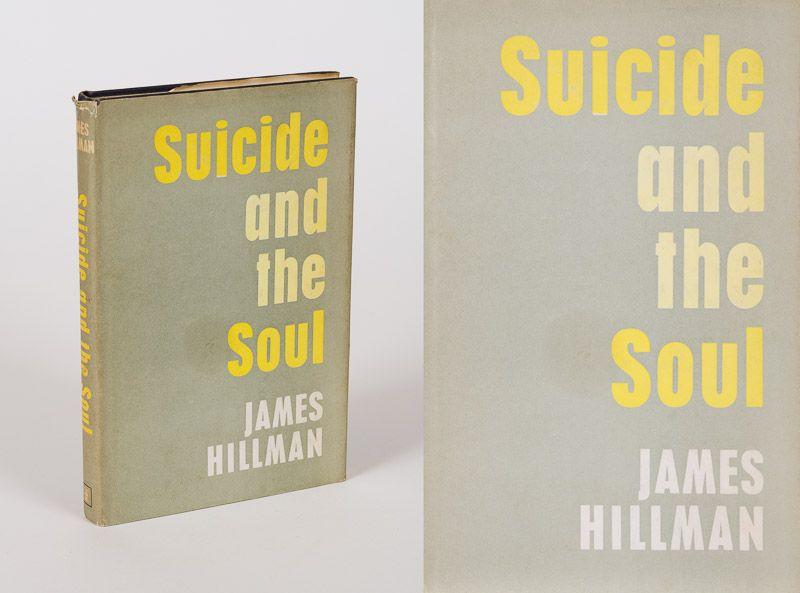
My friend mentioned she was reading Suicide and the Soul by James Hillmann, which looks at how our soul – which is eternal – acts in the face of Suicide.

Suicide and the Soul by James Hillmann

In Norwegian Wood Murakami talks of Death. Specifically suicide. The narrator tries to make sense of the passing of his best friends,

Death exists, not as the opposite but as a part of life. By living our lives, we nurture death.”

Norwegian Wood Huraki Murakami

This seems like a cliche. But surrounded by his other words and the intense feelings of the narrator, it stands out.

The memories would slam against me like the waves of an incoming tide, sweeping my body along to some strange new place- a place where I lived with the dead. Death in that place was not a decisive element that brought life to an end. There, death was but one of many elements comprising life.

I felt no sadness in that strange place.

Norwegian Wood Haruki Murakami

It gives the overall impression Murakami had deeply considered death.

It also has anger. The kind of anger that is very believable.

Where the dialogue in this novel sometimes feels unrealistic, the parts about Death are the opposite.

Once upon a time, you dragged a part of me into the world of the dead, and now Naoko has dragged another pat of me into that world.

Norwegian Wood

This is the characteristic anger that often affects the family affected by a suicide. You often hear the left-behind use the word ‘selfish’ to describe such acts.

My friend however, was just trying to understand how his soul would find peace. Especially because, at the end, he seemed in such a frantically destructive mode.

I hope his soul is at peace now.

Without meaning it to be, I suppose this post is an ode to you Mr Green. May your spirit make sense of the afterworld better than you could make sense of this one. As Murakami called it, “this imperfect world of the living.”

Altitude Sickness in Alishan

Alishan’s Majestical Sea of Clouds at Erwanping

Recently, on a whim, I made my way to Alishan National Park.

Having talked to my former roommates about the Alishan Forest Railway, which they recommended, I finally decided to take the ride. Whilst my erstwhile friend Paul took a detour to Tainan to see a friend, I made a rash, last-minute decision – sitting alone in Paul’s hotel downstairs – to go. The idea of the train emerged (as ideas always seem to forge their way into my psyche at such moments) and I did a quick review of the logistics;

High Speed Rail to Chiayi -> Next day take the Alishan Forest Train at 9am – work my way along its scenic route. The rest, at this point, still unknown.

The trip that materialised was a hybrid train – bus trip, which eventually took me to Alishan National Park. Up in Alishan I felt an intense connection to younger years spent Skiing the Alps with my family. The cold air, with the hotels and resort accommodation all huddled together, was great. The key difference was the price. Alishan is affordable for a back-packer budget traveller such as me – only in Vietnam have I ever escaped anything that doesn’t resemble budget travel!

Anyway, the first part of the trip started down at Sea Level; Chiayi. Here you take the Forest Train Line which meanders its way uphill. That is if you can find the fairly inconspicuous ticket office. The ticket office can be found next to the entrance of the station, a small window with a man sitting behind it. It has all the feel of Harry Potter’s Hogwarts Express. One could quite easily walk by and never notice the window, with the little man sitting inside. It really has a Platform 9 and 3 quarters feel about it.

The Alishan Forest Railway

The 70km Train, built by the Japanese, plunges through 48 tunnels and crosses 74 bridges, rising to an incredible altitude of 2451 metres, from just 30.

I took the train up the mountain and as we stopped at each station we climbed higher. I followed our progress on the map I was handed by the ticket office. (This can be seen below).

Chiayi is at 30 metres. The next stop is Zhuqi at 127 metres. And then Jiaoliping Station at 997 metres. Jiaoliping is noted in the guidebook as being a “Village with a nostalgic grocery store”. I was not sure how a grocery store could be nostalgic, but it stated underneath:

Nowadays, only an old grocery shop remains, providing a service for villagers and tourists alike, conveying a sense of nostalgia.

Alishan Forest Railway and Cultural Heritage Office
Provided by the Alishan Forest Railway and Cultural Heritage Office

As I was riding the train, I was under the impression that it would ride all the way up to Alishan at 2216 metres. But after speaking to a Taiwanese girl on the train, I realised it would stop at Fenquihu, at 1403 metres. This was no matter, and enhanced the trip, as Fenquihu was a beautiful village. Highly enjoyable to wander with many culinary delights – including the most delicious doughnuts you will ever try!

The guidebook describes it as thus: “This is the largest intermediate station on the railway used to be a division point where steam locomotives were maintained, prepared and refueled.” This time it even had nostalgic stairways;

Because of the railway, Fenquihu became the center of the area and is renowned for its old streets, railway lunch boxes, and bamboo. The stairways of the old street provide a nostalgic atmosphere. To enjoy the forest, visitors can take a walk on the circular trail around the village.

Alishan Forest Railway and Cultural Heritage Office

From Fenquihu I took a bus to the Alishan National Park. And from there I had an amazing trip; hiking, making friends, taking the sunrise train to Mount Ogasawara – an incredibly beautiful way to start the day – and all around enjoying the crisp mountain air.

Anyway, because I had befriended the lady who worked at the hotel, and she told me she could take me on some special hikes and routes; I decided to come back the next week. I wanted to enjoy the scenery again, and see what adventures and new routes awaited me.

On the 2nd trip, my companion took me on a hike to Lulingshan, which eventually reaches the Jade Mountain Trailhead. Jade Mountain is the tallest mountain in Taiwan, at 3952 metres high.

Another view of those majestic clouds

Arduous and fulfilling, with Mr. Titi, the colourful bird, spending most of his time diving into my bag to look for Peanut Butter.

Right after we had stopped to take photos at the Jade Mountain Trailhead, I grew wide-eyed with wonder at a climber descending who looked like some kind of Nepalese Sherpa.

We started uphill, and suddenly I felt out of breath. My chest seemed to tighten. I stopped, took food and water.

My companion was saying, ‘its not far, just over this hill’. That small distance suddenly felt like Everest.

I kept going, more for her sake than mine.

I became more and more dizzy, and was climbing the steps on my hands and knees.

Thankfully we ran into an elderly taiwanese couple who said they would escort me down to the Jade Mountain Trailhead, and I would meet my companion later.

Thank god for this couple. The man was so alive with the views he saw at every moment. Even though I felt awful, it was still as if I was walking amongst the clouds of heaven.

This man owned a Green Tea Store. Alishan Green Tea is the best in Taiwan. This was his adorable daughter

This man was 75 years old, fit as a fiddle, brought me countless pieces of Guava, and really stood for what I see as the quintessential element of the Taiwanese people; Goodness.

In his own small way, and in his pure joy of the Mountains, he had helped an Englishman stumbling about, out of breath. A 75-year old guardian angel.

Altitude Sickness happens a lot out here, but it isn’t nice. It hasn’t happened to me before, but has given me more respect for these mountains.

Will I go again? 100%

My friend, and her colourful companion

Trips to Haunted Temples

There is something peculiar that happens to the mind when one is on a stretch of travel by train.

I have been on these trips at times myself, most recently to a job interview. You are in a state of anticipation and hibernation. A state of hibernated anticipation. There are many travel blogs that attest to trains being the superior way of travelling, and I do believe there is something to it. The HSR here in Taiwan truly is revolutionary. I have been on trains in the United Kingdom and Europe my whole life, and with this in mind I was quite attentive to the speed of the landscape rushing before my eyes. There is no doubt about it, it truly is faster.

High-rise concrete apartment blocks flew by followed by looming mountains, wind turbines and then industrial factories and chimneys; steel production is at an all time high in Taiwan.

I only mention the train journey above, to lend creedence to the idea that there is something about the whirl of landscape that goes flooding by your window that allows for the kind of thinking conducive to creativity. It is at these times that artists will declare melodies of unknown origin entered their psyches, or writers suggest new ideas or characters blossomed. This is the case with one of my favourite poems by Philip Larkin The Whitsun Weddings. The blend of impressions and reflections on the given moment, on a train journey from Kingston Upon Hull – where I once lived – to London, whilst several weddings whizzed by, can only truly be captured in poetry.

The Dog Temple of Northern Taiwan

Recently, I was on what can only be described as the kind of one-day trip provoked by a man deep in the bowels of his dissertation, and anxious about it.

The story is incredible; a haunted temple, built on the northern coast of Taiwan to commemorate the death of 17 drowned sailors, and a dog who followed his masters to their grave.

The Eighteen Kings Temple or 十八王公廟, was once hugely popular – even if its main clientele were of a more unscrupulous nature. It seems to be a temple for ‘the lost souls’; those who professions didn’t enable them to seek solace or fortune from a more conventional temple; ‘underworld’ figures who came to be blessed by the spirit of the dog, who was not picky about your life choices. More can be found out about the temple here.

The 18 Kings reference is to the actual dog becoming actualised as a King; a mythic figure in his own right. The 17 drowned sea merchants and their dog, all saintly and holy figures. Different stories abound as to what exactly happened; sometime in the Qing Dynasty (1644 – 1911) the ill-fated crossing was made from mainland china – the dog either perished along with his masters, or miraculously survived.

After the people of Taiwan built the temple on the cliff overlooking the sea, so the story goes, the dog jumped into the burial chamber and refused to move, his unwavering loyalty to his masters so strong that the people of Taiwan were forced to bury the dog alive.

The Temple is located right next to a decommissioned nuclear plant which further adds to the Surreal nature of the place

It was a particularly blustery and rain-soaked day when we made our own venture. First we took the train to Keelung. From there we had the usual uncertainty and logistical problems of locating the correct bus, which always come in a trip of this kind.

We took the bus, which meandered along the northern coast of Taiwan. Something about that wet, overcast scene reminded me of England; specifically Portsmouth, the Isle of Wight and that particular pocket of the South Coast – the jutting rocks slicked grey from the rain, the swell of the sea thrashing against the cliffs, and the grey, grey sky with its brooding overtone. On the precipice of the edge of the world so it seemed. Taiwan, an apt place to be, on the edge of something anyway.

The scene through the window gives a sense of the weather we had to endure

We overshot our stop. In desperate need of refreshment and respite from the rain, we ambled along a two-lane coastal highway, with scooters occasionally whizzing by, and found a funky restaurant – cum – hostel.

After a few words with the owner, the exchange dealt with by my erudite friend in his very good Chinese, we settled down with a couple of beers at the tail-end of the diner / bar. This is where the above picture was taken, looking out onto a Sea where the horizon was obscured by cloud.

Having a Corona

The wondering academic – will remove images at his request

Once we had taken a beer, we correctly navigated the way to the bus stop to work our way back. From here we were finally able to witness the temple in all its glory.

Again, it is worth noting the scene. We had had to stop for umbrellas at the train station, both of us forgetting to bring one, with my Indiana Jones-type friend only wearing a T-shirt! On such a cold and rainy day as this, it could prove to be the difference between a successful or disastrous trip.

Once we had arrived, the rain abated. The air is fresh from the mountains, and the dense foilage you get in Asia. The temple had a few other visitors, mostly clad in rain-gear. The swelling of the Pacific nearby the bridge and the water which ran down to the decommissioned nuclear plant, held firmly in my memories eyes. There was some meagre food and market women selling cheap tat and umbrellas.

I am pointing to the Nuclear Plant. The water beyond the Dam Wall lead to the Ocean

Inside the Temple was a very different scene, however.

This photo from captures the dreary, wet afternoon

At first it seemed there was nothing remarkable about the inside of the temple. The usual deity statues and incense candles burning. A few people stopping and nodding at the Buddha-like figures and muttering prayers. However, once you descended easily-overlooked stairs you found yourself in a very different room.

The pictures below will give the best description, but there is a painted image of the Dog deity, a burial chamber with a ceramic mound that has dozens of business cards laid across it, and a clay model image, protected by a glass visor, of the 17 merchants and their dog. The image is suggestive of the Raft of Medusa. There is actually one figure who seems to be baring his/her buttocks, whilst another slaps them.

The Burial Chamber with the image of the Dog

The model of the Sea Merchants and Dog

Note the various Business Cards. There were Lawyers, K-TV business owners, and call-girls amongst the assemble.

The end was neigh, and after spending our time perusing the temple, and the Nuclear Plant, we made for the bus. The bus comes thrashing along at what seems 100 mph before stopping very suddenly and allowing its passengers to get on. It took us to a place on the outskirts of Taipei.

As always with my swashbuckling friend, we had very arresting conversations and talked deeply on many topics. His research out here in Taiwan seems to have a very wide scope (taking in trips to haunted temples for example), and makes connections between disparate phenomena and cultural events. I seem to remember this temple was only mentioned briefly in some of his work; perhaps just a paragraph. A paragraph nonetheless which still lead to the decision to visit said temple. In terms of the interesting links his work creates, he created an abstract connection between a fabled rock band in Taiwan (of which the lead singer became a politician) and the rise of the Authoritarian state.

I very much look forward to reading his work in its entirety. And I am sure he will be relieved to have it finished.

Here ends the tale of the haunted dog temple. Hope you enjoyed.

The kind of trip provoked by a man ‘deep in the bowels of his dissertation, and anxious about it’

Talks with Students II

I was nervous the whole time from when I stepped out of my dorm! I was even worried about whether the Uber driver would let me ride — I remember I had trouble getting an Uber the day before my flight because I was wearing a mask. Two Ubers took one look at me and drove off.

I was more freaked out than the average person because I had a tickling cough that occurred at night so it was really stressful.

– Vanessa, a student at UCL

One aspect of social media that has been personally beneficial to me, in all this, has being able to contact those living abroad. I was fortunate enough to make some brilliant friends in my time in Asia, and through Zoom and Facebook I have been able to check on their welfare, whilst also gaining insights into how respective governments have responded to the pandemic.

Certain countries in East Asia have been praised immensely; focus has centered on their efforts at contact tracing – ‘test, trace, isolate’, and imposing early lockdowns. Viewing the actions of these governments through a western lens, I must admit, I found this aggressive approach a little, well, disturbing. Data was swiftly released online on the whereabouts of an infected Vietnamese woman in Hanoi; where she had dined for lunch, which streets she had visited, all following an hour-by-hour timeline throughout the day.

Taiwan has only had one death from the Coronavirus

The libertarian in me was shrieking at privacy laws being violated, but in all honesty the question is, what privacy laws?

How then, can this approach be navigated by overwhelmed Western countries trying to learn from the East, whilst simultaneously maintaining individual rights of privacy?

To hear a personal story on this, I have been able to contact a student at UCL. Vanessa, a student from Taiwan, came to London to study Arts and Sciences. Just before the U.K. government imposed lockdown, she took off for Taiwan; desperate to get home.

We talk about her experiences of flying, the lockdown and lessons to learn from the Taiwanese government.


Vanessa, Student at University College London


Hello Vanessa. You study at UCL. I heard you decided to leave for Taiwan before the lockdown was imposed. Can I ask what led to this decision?

V: Initially I just wanted to return home for the month-long Easter holiday, so I booked a return flight perhaps a week before UCL announced cancellation of teaching. However once UCL announced the cancellation and the cases began to rise, I became really anxious and decided that Taiwan was the safest place to be, so I was going home for a long while. I moved out of my dorm in the days before my flight; 18th of March.

In the light of the constantly circulating news, it must have been scary to board the plane. Can you tell me what the atmosphere was like at the airport? Was it busy/quiet, and were people being very careful about their proximity to others?

V: I was nervous the whole time from when I stepped out of my dorm! I was even worried about whether the Uber driver would let me ride — I remember I had trouble getting an Uber when I had to move stuff to my cousin’s house the day before my flight because I was wearing a mask. (Two Ubers took one look at me and drove off.)

Gatwick was super quiet, lots of shops were closed and there were no crowds as we walked around the shopping area on the way to the gate. Most people weren’t that cautious about social distancing, except when we got to the gate and it was mainly Taiwanese people. They took it very seriously and were prepped with PPE. I was more freaked out than the average person because I had a tickling cough that occurred at night so it was really stressful.


A worker in Taiwan

My family and I got a mass text that we were in the same area as sailors from an infected navy ship

I have read that Taiwan has been praised for its response to the pandemic. Do you feel safer in Taiwan than the UK? And what lessons could have been learnt by countries such as the UK?

For sure! I’ve never been so relieved to go home— at that time Taiwan only had 50 cases while the UK had over 1,000. Before I boarded, my friends sent me a QR code to fill out my health particulars online before I boarded, so that when I landed I would be allowed to bypass the long lines for health checks. I also got tested at the airport along with my friend because we both declared on the form that we had minor cold symptoms and wanted to be on the safe side. The process was surprisingly not intimidating and very efficient, I got out of the airport in a little over 2hrs, and headed home to begin my 14 day quarantine.

Some lessons that can be learnt from Taiwan’s example:

Tracing cases early on and containing them before community transmission gets out of hand. For example, my family and I got a mass text that we were in the same area as sailors from an infected navy. Their locations were posted publicly so people could take measures…

If you don’t have a suitable quarantine place for whatever reason, the gov. will provide a place. It’s pretty decent quality, despite the ruckus from that BBC article.


Taipei

My parents left me food on a tray outside the door daily

On your arrival into Taiwan from the UK, did you have to go into isolation for a period of time? If you did, can you tell me what that was like?

I definitely felt that I was in safe hands from the way the quarantine was carried out by the Taiwan CDC. I stayed in my own room the whole time, and my parents left me food on a tray outside the door daily. We all wore masks if they needed to speak to me at 1.5m distance. My mum screams if I accidentally get too close!

My phone signal was tracked as well so that I couldn’t leave or I would be fined. I received a packet of masks from the Gov. and special trash bags for my own use to avoid contaminating others.

After my quarantine I was free to leave the house, and I noticed a lot less people on the streets. Everyone wears masks; it’s mandatory to wear them on public transport. Stores check your temperature and spray your hands with alcohol before you can enter.


Taiwan is located only 130km from mainland China. Are you able to comment on the initial atmosphere after arriving home from the UK? Was there a lot of fear and panic ensuing in the country?

The week I arrived home was the most severe since the outbreak. The atmosphere was not panicked; more vigilant and cautious. There wasn’t much panic buying since masks were rationed from the start – right now every 2 weeks we can collect 9 masks; 1 mask costs 5NTD.

On a personal note, your studies have now been disrupted. Do you still plan to continue studying, and do you have plans to return to the UK?

Like all UCL first years, our exams/ assessments are canceled and replaced with one pass/fail capstone assessment. I plan to return for Second year this September, unless the situation is still terribly dangerous.


My phone signal was tracked as well so I couldn’t leave or I would be fined. I received a packet of masks from the Government and special trash bags for my own use to avoid contaminating others.


Finally, I was reading that Australia is supporting Taiwan’s return to the World Health Organisation (WHO). What is your opinion on Taiwan’s status in regards to this?

Taiwan has definitely received a lot of international support for attending the WHO conference, but as of yet the WHO isn’t budging and is unlikely to do so. Taiwan has been benefiting from a boost in global status thanks to mask diplomacy/healthcare, but once the pandemic starts to decline I wonder how quickly other nations will forget Taiwan’s role and what it offers for the global response. 


Once the pandemic starts to decline I wonder how quickly other nations will forget Taiwan’s role and what it offers for the global response.

Thank you, Vanessa. Some very insightful answers.

Next time, I hope to talk to a Filmmaker in China.

Until then, ciao.

Talks with Students

Groningen on one of those starry-eyed Sundays

Recently, one of the fellow students on my course decided to leave Groningen in the Netherlands to return home. This was by no means a strange occurrence, the main difference here however, was my friend was returning to Bergamo, the epicentre of the pandemic in Italy.

With the world standing on a strange precipice right now, many students have been frantically returning home, or desperately trying too.

One of my friends abroad recently graduated, having to enjoy the celebrations virtually. Here’s to spilling the champagne all over your laptop, as you strain a virtual smile to the Dean of your faculty. Japan even have iPad’s doing the job for us. The world of automation has finally come to good fruition. All we ever needed was a pandemic.


My aforementioned friend wrote a very moving Instagram post about leaving Groningen, so I set out to understand his point of view. I wanted to hear what had lead to this decision; were his fears grounded in reality; the different responses from the two respective countries; and finally if he would be able to keep studying at such a time.

In advance, thank you Andrea.

Andrea, Student at The University of Groningen

Hello Andrea. 

I know you’ve recently decided to leave Groningen and return to Italy. 

I hope to ask you some questions and in turn have a conversation which others around the world will hopefully find enlightening at this troubling time. You are an International Student studying International Relations at Groningen, and I thank you for your insights.

So with that, let’s begin;

With the current global situation still escalating in some countries, whilst slowing in others, it made me think that perhaps the course currently feels irrelevant.

Can you tell me, under the current circumstances – and taking into consideration the fact that the course has a focus on Globalisation – do you feel the course is irrelevant? Or is it the opposite, is it more relevant than ever?

A: I don’t think the course of study is irrelevant. On the contrary, I believe that this global pandemic demonstrates that on certain issues, in this case health security, it is essential for the future to have well-structured prevention plans at the global level. Certainly for those like us who are still  students, and that now find themselves in the position of approaching the world of work in this period, this international context of crisis does not help. As you know we have a mandatory internship in the course, and probably given the circumstances it will be very complex to find one. 

Nevertheless these are two different discourses: now it is certainly more difficult to find a window to enter into the field of work. Nevertheless I don’t think that the sector has become irrelevant. There are still much things that need to be done, probably even more than before.

Groningen by day

You mention in your post that you see the University as a representation of your commitment to reach your goals. Considering what has happened, do you feel your goals have been put on hold somewhat, or do you still feel invigorated and motivated to work?

A: Certainly the University of Groningen, at least for me, has a deeper meaning rather than representing just a simple academic path: I see it as the representation of the way that I want to follow to achieving my future goals.

The current situation does not change my goals. And it doesn’t change my motivation either.

But it can certainly make these goals more difficult to achieve. For example, as mentioned above, in our course we have a mandatory placement; that part of the course has always been the one that intrigued me most.

I could not wait, and still can’t wait, to get involved in an international working context linked to my field of study. 

This pandemic obviously slowed down the application procedures, possibly even making them disappear completely. 

Surely this will have an impact on several students of our course who will have much more difficulty in finding an internship.

Like everyone else I will have to try to do my best to overcome these new and unexpected difficulties that the world has put in front of our face.

Andreapost

To recap, you recently left Groningen to fly back to Italy. Could you explain your decision, or the main focus of your decision?

A: My decision arose mainly from the desire to spend this period at my home in Bergamo, with my family.  Primarily because I believe that being close to your beloved ones is important in such a complicated period.

Moreover, given the online nature that courses will have for the whole semester, I decided to return to Italy also to save money on the rental price – which I obviously don’t pay anymore – since my presence in Groningen become quite superfluous.


Was there any resistance to your decision to head back to Bergamo, knowing that it was particularly hard-hit by the pandemic?

A: No, on the contrary my family was pushing a lot for my return. 

Furthermore you have to consider that I came back when, although  the situation was still serious, the worst crisis in Bergamo was already passed.

Having now returned to Bergamo itself to see your family, can you comment on the atmosphere upon returning? Has it been a difficult transition?

A: Personally now that I am at home with my family I am experiencing a good atmosphere. We are all happy to be together and we are enjoying the beautiful sunny days being out in our big garden, trying to make the most of this period of “forced rest” at home.

But I have to say that surely arriving in Italy you can breathe a much more serious and heavy atmosphere regarding the pandemic. 

In Groningen, on the whole, the situation has always remained quiet and almost normal. In Italy on the contrary no, especially in Bergamo the people have suffered a lot – with death rates 10 times higher than normal. 

The impact I had with the scrupulous controls in the airport, with deserted highways and with a life that seems to have stopped completely, with people locked in houses, is certainly strong and makes you think a lot.

However now the situation is slowly improving, people are pushing for the possibility of going out more and more. 

There is a bit of a division in the society between those who would like to reopen as much as possible and those who still have in their heads the images of the coffins leaving Bergamo on military vehicles, and therefore are more cautious and call for attention. 

We are in a period of transition, as most of the world, with which we still have to deal.

How has it been experiencing two different sides of the lockdown, from Groningen and now Italy?

A: In Groningen I could go out without problems, meet with 3 friends and spend a nice afternoon in the park. The only real measure was keeping the 1.5 m distance.

Of course the bars and restaurant were all closed, but still the life was quite enjoyable.

To make you understand, in Groningen if you went around with a mask you felt observed, judged almost as you were doing something exaggerated. 

In Bergamo the masks are mandatory.

These are two uncomparable situations.

The response to the Pandemic has differed from country to country. Some responses have been praised, others have been criticised. Knowing what you know about the Italian government, can you tell me your feelings on their response? Is there any resentment from the local people?

A: I can certainly say, that especially in Lombardy there have been serious shortcomings by local politicians who initially underestimated the seriousness of the problem. The Bergamo area should have been closed much earlier, and separated from the rest of the region. This was not done for economic interests, since Bergamo is one of the most productive and economically rich provinces of the whole nation. 

This “not-done” closure has certainly had terrible repercussions on the population.  Lombardy alone has nearly 10% of Covid’s worldwide deaths – someone has to take responsibility for these deaths. 

There is therefore surely a big resentment in the local population.

Then the government did what was necessary to deal with the horrendous situation that came into being, so they blocked the entire country.

On the long term this will have huge economic implications, and the national public debate is now touching on this point a lot.

Ameland in the Netherlands, north of Groningen

Thank you for your time Andrea. 

One final thing would be to ask what your plans are going forward and what you envision for yourself after a semblance of normality returns to the world?

A: I personally aim to finish the Master lessons as soon as possible, so then I can focus solely on the internship.

Of course I would like to start to work later, but I will see what will be possible.

Thanks to you Tom.

So there we go. Thanks again Andrea.

This begins a new series I will be dedicating to talking to students.

At a time like this, it’s imperative to hear these personal accounts of hardship, so once the dust settles, we realise that we came together to triumph over adversity. Where the human spirits lies, the human spirit will prevail.

Dreams of Italy

It is necessary that the daily becomes heroic and the heroic becomes daily.
John Paul II

By the dim lights of Delhi, I saw hundreds that night, under trees, shrines, intersections, on benches, squinting at newspapers, holy books, journals, Communist Party pamphlets. What were they reading about? What were they talking about?
But what else?
Of the end of the world.
Aravind Adiga, The White Tiger

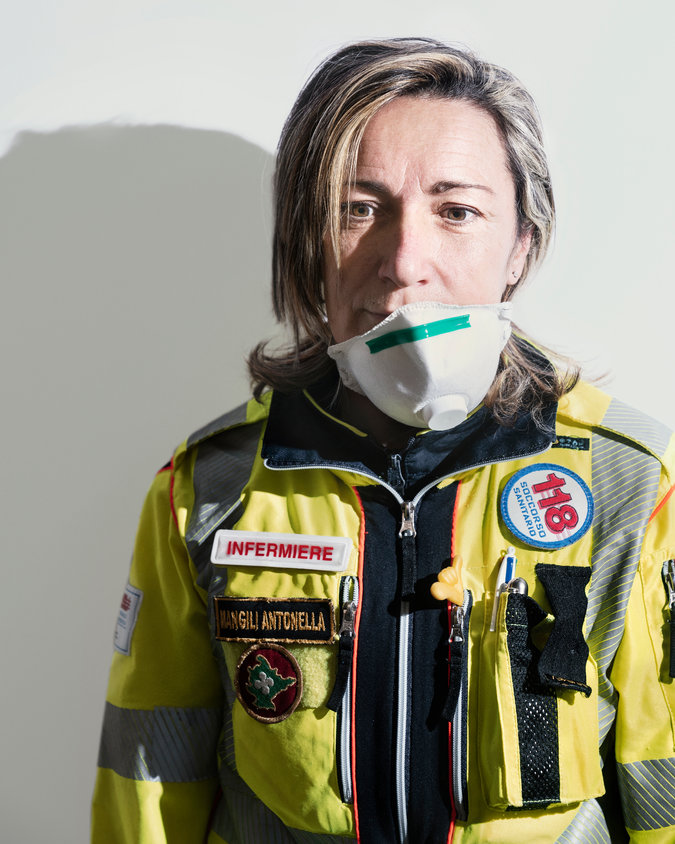
Reading this article in the New York Times Magazine, for some reason, set off a chain of events in my head. Both moving and personal, this account of a photographers desperate attempt to portray the unravelling crisis in Northern Italy, all the while underpinned by his own family’s precarious circumstances, is a very moving read.

It is a very moving account of how the pandemic first seized power on the people of Northern Italy, and of the heroic actions of the medical staff who desperately tried to put out fires, whilst also trying to maintain their own sanity.

It struck me that this photographer, Andrea Frazzetti, realised quite instinctively what was unfolding. This was in contrast to some of his family, which, like the much criticised government, were slow to react. Unfortunately, as has been seen, this lethargic response proved to be deadly.

Of course now the present is far from perfect, but in the midst of all that has been happening in Northern Italy, some light at the end of tunnel gingerly seems to be filtering through. Of course, I do not want to speak too soon. I have not dwelled on my time in Italy, but it does strike me how in many ways, I left just before the explosion. Just before things got really bad. I was even in Bergamo in early December. All these places have recently become stamped on our collective consciousness.

My time in Milan was chiefly characterised by instability. Dragging my belongings from hostel to hostel down busy roads in the Porto Romano, finding a few chic cafes and a little home-made vegetarian place VegAmore – which I’m sure has been hard hit, but I do hope has not been closed down – my life ambled on chaotically. You could almost make a film of it; set to the Benny Hill music.

I was very fortunate to meet some great people at the Queen’s hostel. There was a group of South American, mainly Brazilian, guys who worked there. Mostly volunteers, they showed me some of the magic and delights of Milan. It was still a shock, to have come from a small city such as Groningen to a bustling metropolis like Milan, and suddenly having money to spare too.

Training in Verona

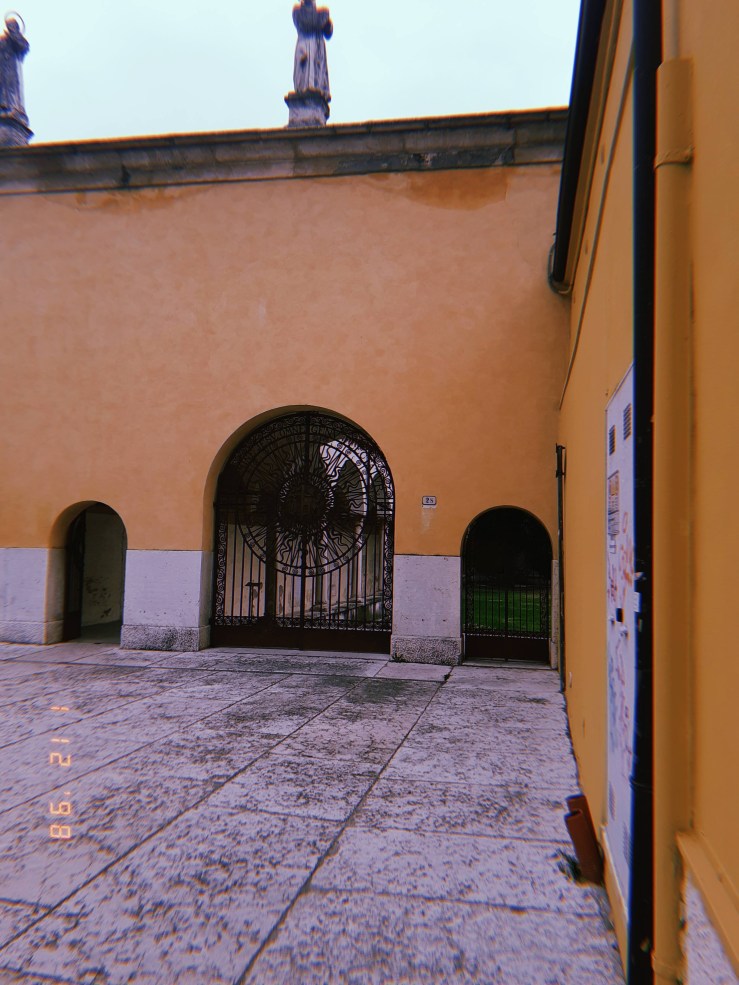
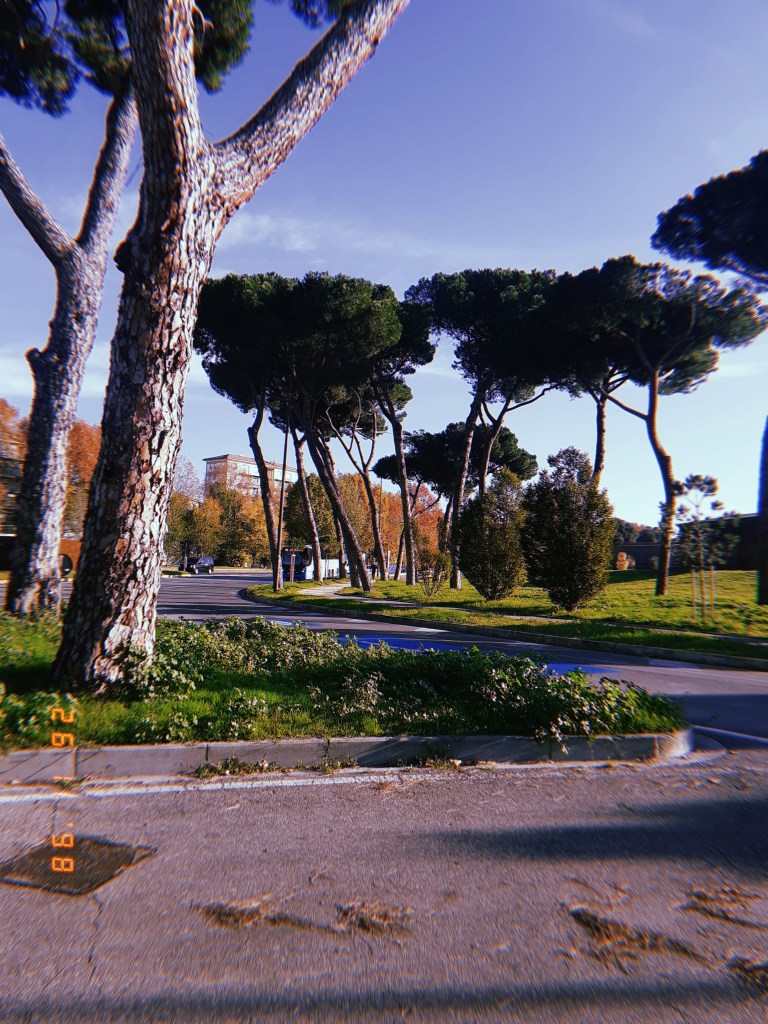
Undoubtedly things went from bad to very bad, quite quickly. It became apparent that finding somewhere to live would not be an overnight endeavour. I had this strange double-life, with people I met at the Hostel and then business-as-usual at the school. I remember going to a flat viewing with an Italian actor, who had spent time in the hip Brent Cross in London, and seemed to spend much of his day meditating and doing a form of Yoga I had never before witnessed.

One morning, I tried talking to him, and he told me not to disturb him, “the problem is, I need to spend the whole day in the Vortex, Tom.”

However, this was a man who went by the moniker ‘Baby Rush’.

Baby Rush himself…

Now of course, looking back, it feels like I was incredibly fortunate. Not that I didn’t bring some of the hardships on my self. But the constant chaos with its brief respites, which mainly consisted of hanging out in the cold sunshine of Park Sempione with a Brazilian girl I had met at the hostel, seems now to be a trite comparison to the current state of affairs.

My problems were never really problems in the grand scheme of things. Mine was only one story, meandering its way through the rubble and street-life, just as many were doing. To look back and appreciate in its chaos, a learning curve, is to unequivocally accept what I could not accept at the time. The option to see the trees and the wood.

The people I knew from my short time there, are all fine. So that is great. Of course, their lives have been greatly affected; the school I worked at is of course closed down. The hostels too, no doubt, will not be offering accommodation to either the needy or the less needy.

Christmas Decorations in Milan

I remember one evening after work, nearing the end of my time in Italy, feeling a little lost and depressed, I took a walk to the centre of the city. I hadn’t wanted to go back to the hostel, nor see the Duomo and its surroundings, so I went walking.

It was a week-day and this was a shopping precinct, so it was quiet. Just the dazzle of the nearby glass interiors of the shops, Christmas glowing from inside, like the belly of a colourful beast. The lights spilled out onto the streets. The occasional Tram went by, and a few cars cruised down the central road. I remember seeing tinfoil and feeling dazed from the lights.

The Santa Del Carmine

I saw a homeless man. He had nothing but his dog and a tent. No-one bothered him, and he was busy – moving his things and preparing for the night. I approached him with a smile. At first he was taken aback, and scoped me out. Seeing I did not pose a threat, he relaxed and looked at his dog, who was sleeping. I handed him a beer, and tried to speak in broken Italian. He responded in broken English. We had an awkward conversation, then enjoyed a drink and looked heavenwards. The stars were out that night. Hopefully they are still out for that man. Hopefully, somewhere now, he is in a good place. Perhaps a better place. I’m lucky enough to say I am. Cliched as it is, right now, only time will tell.

Neruda and Rimbaud

For an Englishman who only has a rudimentary grasp of Spanish (albeit I have dusted off the grammar books recently), it may be dangerous territory for me to be writing a piece on the Latin American giant Neruda and the French Rimbaud. For my French aspirations, perhaps the phrase L’espoir est éternel is best used in this case… Hope springs eternal, that is

Or perhaps I can say, my french lessons came to a whole n’importe quoi

(To those diligent enough to look up the translations I salute you!)

My knowledge on Neruda was limited; I know of him mainly through The Motorcycle Diaries where the two protagonists, including Che, would often quote him as their voyage continued. I had also heard of the famed Twenty Love Poems and a Song of Despair.

In all honesty, I found it quite trite and sentimental, and did not enjoy it too much.

Laura’s dusty old Neruda Collection

However, from my brief glimpse of time in the Sierra Morena, with my nomadic friends, the continuing hippie existence, the Russian girls and the conversations on philosophy, politics and nature that punctuated my time there; I quite fortuitously happened upon an old book of Neruda that Laura had amongst her extensive book collection. Other topics were child development, psychology, RD Laing and even the much-loved Socialist musician / artist / Author Woody Guthrie.

The above-pictured collection of Neruda’s poems was my half-hearted attempt at re-learning Spanish whilst living, very much in an English speaking house, in the heart of the Sierra.

Going through my musings and translations at the time, I did make quite an interesting note about the Spanish language; nacer con un pan debajo del brazo – which roughly translates; ‘to be born with a loaf of bread under your arm.’ It was my impression that this essentially meant the same as the phrase to be born with a silver spoon. However, it turns out after further analysis, that instead the term is connected to the birth of a child. The feelings of happiness and good fortune from the birth of a child – a baby is born with a loaf of bread under his arm – is a closer translation.

For Whom the Bell Tolls…

Coming back to Neruda.

Turns out I wrote down a fair few of his poems, and this is one I really enjoyed. I hope you like it too.

Fable of the Mermaids and The Drunks – P. Neruda

All these men were there inside
When she entered, utterly naked
They had been drinking, and begin to spit at her
Recently come from the river, she understood nothing.
She as a mermaid who had lost her way.
The taunts flowed over her glistening flesh.
Obscenities drenched her golden breasts 
gleaming once more like a white stone in the rain; 
and without a backward look, she swam once more 
Swam toward nothingness, swam toward her dying

This struck me firstly as quite surrealistic. The poetry of Rimbaud, Dylan Thomas and even Charles Bukowski are by turns Surrealistic and abstract. However, I did not know Neruda had this particular strain as well. The poem seems to encapsulate ideas on the loss of innocence and perhaps even the attitude of locals to foreigners. That which is foreign is dangerous. There do seem to be undertones of xenophobia hidden here.

Another poem of his that I made a note of was the poem And How Long?

This poem is longer, and immediately made me think of my amigo Carlos. The man whom is eternally on a quest for answers. He travels far and wide in the search of such answers. Then on not being understood in the source of his quest, decides to cut his losses and return home.

And How Long?

How long does a man live, after all?

Does he live a thousand days, or one only?                 A week, or several centuries?

How long does a man spend dying?         What does it mean to say ‘for ever’?

*****************

Lost in these preoccupations
I set myself to clear things up.

I sought out knowledgeable priests,
I waited for them after their rituals,
I watched them when they went their ways
to visit God and the Devil.

They wearied of my questions.
They on their part knew very little;
they were little more than administrators.

     Medical men received me
in between consultations,
a scalpel in each hand,
saturated in aureomycin,
busier each day.

As far as I could tell from their talk,
the problem was as follows:

it was not so much the death of a microbe –
they went down by the ton – 

but the few which survived showed signs of perversity

They left me so startled
that I sought out the grave-diggers.

I went to the rivers where they burn
enormous painted corpses,
tiny bony bodies,

emperors with an aura of terrible curses,
women snuffed out at a stroke

by a wave of cholera.
There were whole beaches of dead
and ashy specialists.

When I got the chance I asked them a slew of questions.
They offered to burn me: it was the only thing they knew.

In my own country the
undertakers answered me, between drinks:
‘Get yourself a good woman
and give up this nonsense.’

I never saw people so happy
Raising their glasses they sang,

toasting health and death.
They were huge fornicators

I returned home, much older
after crossing the world.
Now I question nobody.
But I know less every day.

As you can see this is, by its nature, a metaphysical poem. The narrator is longing for answers; answers his heart can’t seem to give and the outside world seems too indifferent to answer. He travels far, but returns empty-handed, or perhaps even with more questions. However, this time he allows them to bubble up within.

Lastly, a documentary worth watching on Rimbaud, if you have the time (time has been given a new conception recently; in its abundance). Stumbled on this whilst sick one day, and it later inspired hitch-hiking travels.

Englishman in Seville

For if there is a sin against Life, it consists perhaps not so much in despairing of Life as in hoping for another Life and in eluding the implacable grandeur of this Life.

– Albert Camus

Englishman in Aracena would be a much more accurate description right now. As this is where I am.

Aracena is a town out in the ‘wilderness’ of Spain’s forgotten southern Sierra. Or rather not forgotten. Never forgotten by those who have known it. Or those who have set new eyes on it, like I have.

Unparalled beauty; rolling hills which seem to lurch and lunge, and pulsate at you. This feels like Pan’s Labyrinths fantasy world. There is something Surrealistic about it. I can view it through my eyes, and take in all it’s lustre, and at the same time Rimbaud’s lines play like music in the back of my mind. Walking around this land on a sunday walk with Jake, Laura, Dasha and Tanya; I was thinking about Rimbaud and the life he chose. Pennilessly travelling by foot through Europe, similar to what Carlos does. Or did.

This is Carlos’ land after all, and it was because of him that I first arrived here from Barcelona.

The sun caught in the water, on a sunday walk

The Sierra’s full name is the Sierra de Aracena and Picos de Aroche Natural Park. It consists of many of these little Pueblo’s that are white; all the buildings and houses, the Ayuntamiento (town hall), the churches – all white. Occasionally broken by the odd blue church roof. I reasoned they painted it all white to keep it cool in the summer, since this is in the scorching centre of Andalusia. Chefchaouen in Morrocco, famous as the Blue City, was painted this colour for its apparent cooling effect. The same with India’s blue city, Jodhpur.

But hang on….

What’s going on?

Who are these people? Why Am I in Andalusia? And why am I blogging on a much disused WordPress page that was set up to document my time living in Hanoi, Vietnam (and which in reality only lead to a pathetic two posts my whole time there) …

Well, I don’t know exactly if I’ve been looking to escape life or embrace a new future, but I would say my time here in the beauty of this land, with its sumptuous fresh air, has allowed for restoration. Perhaps rejuvenation too.

The view, by dusk, from the Villa

For those of you who want to know what I have been upto (the irony that no-one, or perhaps no-one I know will read this, is not lost on me) since the new year dawned; well, I can give a little glimpse into my life here. Like opening my window upon waking in my little room and letting the morning in, with its blue or foggy light, I will open my window now through WordPress and let the world in.

Seville basically looks like Miami through this Google Assistant Touch-up

I came down here from Barcelona because I spotted a £13 flight to Seville, and thought this is the perfect chance to see my long-lost Amigo Carlos, whom I haven’t seen since he visited me for a few days in Groningen.

Mostly, I was staying at his Mum’s house, but I also visited his Dad’s small farm, where his two sisters were also living. As well as Carlos’s father and siblings there were two dogs, a militant Goose, a handful of sheep and about a dozen cats. The Goose sized me up as soon as I arrived and decided to gauge the hierarchy. Initially he went at me, neck agog, face swooped down low, hissing at me, with the wings arched in that attack position geese and swans take.

I made a mistake. I ran away. He had the upper ground. Carlos said to me, “If you keep on like that, he will think he is in charge, and you will have a problem the whole time you are here, Tommy.” So I picked up a stick, and tried to hold my nerve as I moved towards him, nerves of steel. He stood still longer than I anticipated and although I swung the stick through the air as a few warning swings, I almost lost my nerve as he stood hissing, until right at the last moment he bolted and waddled away in a flurry of feather and anxiety.

He left me alone after this. It may seem primitive or even mean, but this is the way of the Granja, the way of the beasts.

We took walks. Long walks. All afternoon into evening and the beginning of dusk. Walking from Carlos father’s house in Galaroza to Fuenteheridos, or from Carlos mother’s house in Aracena to Los Marines. We stopped at Los Marines one picturesque day, when the sun was high, and the white buildings almost seemed blue from the reflecting sky. We stopped at a bar in an open plaza, and took a caña in the sun. And some Tapas. There were a few other country/hippie looking folk at a table near us and quite a few people sat at the tables at a nearby bar. There was a buzz of Andalusian discussion. I remember saying to Carlos, “Ahh this is the easy life my friend. This is the good life.”

One of Sevilles majestic parks

And it was. It is still magnificent too, although a little different now. It felt like a holiday in that moment, and it wasn’t until I was amongst the nature in the Sierra, walking and talking endlessly with Carlos, that I realised how much I needed this. This break. From the burnt ashes of the dismal end of 2019, truly dismal, to the present day; much has changed.

As of now, I am living with Laura, a very cool lady originally from London who was born and socialised herself into the mix of Hampstead artists and musicians. She was a good friend of none other than Joe Strummer from The Clash, and often speaks of him. Her ex-husband is a musician, and he played with many famous artists, including Strummer himself with Joe Strummer & the Mescaleros; and Moby. He collaborated with Moby on the landmark album Play.

So these days I spend my time usually very busy. Laura is a force-to-be-reckoned with, loves to keep busy and keep her household full of people; quite often a bustle of activity.

Carlos, looking Sanguine

We talk of music a lot, the ills of capitalism (Laura is pretty anti-system and with one sweeping remark will compare Boris Johnson with Putin and then state how we’re all in the same boat under different circumstances, and without a revolution we’re all damned), child education/development and of course cultural differences between Russia and the Western world.

Why Russia?

Well there are two girls staying here as well as me, in Laura’s beautiful house which was bought for her by her mother. The two girls contacted Laura through a website called HelpX which I had not heard of before, but seems to be another incarnation of Woofing. You sign up as a member which enables you to work your way round the world on different people’s farms. They plan on venturing to Cypress after their time with Laura.

I will dearly miss the food here ….

The girls are Dasha and Tanya. They are both musicians. And filmmakers. Their music videos are therefore very high quality. The songs too are pretty catchy; naturally they are sung in Russian. Dasha is 33 and has a basic grasp of English to the extent that you can have a somewhat broken conversation with her. She will also translate for Tanya. Tanya is 38 and has never left Russia before now, which struck me as phenomenal. Imagine being 38 and never having left your country! Of course the shock is perhaps more for me, a man who seems to endlessly bounce from country to country.

Dasha and Tanya. Ignore my sunblind horror-face

And the last thing I should mention; indeed perhaps the most important aspect of living with Laura for over two weeks, has been the kids.

Laura is an English teacher herself, a very good one. Creative, crafty – the children will often be building something as a vessel to learning the language. For example, her younger kids built a weather mobile with a rainbow and cut-outs for rain, sun, wind etc. And her elder children; many of whom are the brothers or sisters of the younger lot; are right now engaged in producing a puppet-theatre play. Laura has been using Dasha’s creative abilities to draw & paint the puppets, and set. Entrepreneurial, as always. (I have also been doing some fabric drawings for the Set at Laura’s request).

I have been helping her with the kids, preparing resources and doing Teaching Assistant-type work. It’s really solidified in my mind how much I enjoy this work, or at least working with children. When the work is creative it can be very enjoyable.

Some of the great books Laura has on Child Development / Psychology

Of course there is so much you cannot put into words; the living dynamics, getting to know the people you live with on a deeper level; the new music and films you’ve been introduced too; the card games with Jake (a former HelpX to Laura, now staying in her Villa); the occasional visits from Laura’s polite German friend Peter and his wife MJ; the work outside on the fence at the Villa – trying to reclaim the ground which is being lost to the neighbouring Sheep farmer, whilst the two dogs Lunar and Lykka jump over the fence, eat the food laid out for the Bulls, or antagonise a lost sheep.

My fabric pen illustration for the background of the Set for the Puppet-show

It has been truly great in many ways. I have learnt a lot. For the teaching, and much more. Some things have materialised from this experience I could not have believed.

Anyway, enough has been said for one post now. So happy reading, happy travels and happy life!

I will try to not let this blog fall back into abject misery once again.

Goodnight folks!

The beautiful Los Marines. As I walked towards the Church to take the photo, the gulls soared skywards in a magnificent gift of timing and fortune