
Kieran was absolutely adored by students, as well as his fellow teachers. His favourite students were often those who were difficult for others to deal with. He was remarkably empathetic, patient and kind. Children also loved his weird and wonderful sense of humour.
From Remembering Kieran Greening
I’m not sure why exactly, but over the past couple of years death came into my life. Is it because turning 30 can be said to be midlife? No, surely too early. A midlife crisis?
First, there was Kieran, a much loved teacher I know from my time in Vietnam. He had died some years ago actually, but I only found out last year. His death affected me quite deeply.
I didn’t know him too well, but I had shared that particular bubble of existence in Hanoi, where all the English teachers poured in, enjoying the decadent lifestyle our salary and obvious wealth disparity offered us.
We lived like Fitzgerald, Hemingway and Picasso in 1920s Paris; like Montparnasse in its hedonistic heyday.
Kieran’s death however, was surrounded in surreal circumstances: A motorcycle trip to the mountains with a friend. He chose to go swimming. His body was never found, he most likely drowned.
Then came the outpourings of grief. Other teacher’s wrote so lovingly and movingly of him. His kids all adored him. He was a larger than life character, and he left many loved ones behind.
As I said, I didn’t know him well, but there were times when I was socialising and drinking with groups of people where he’d been present. Memorably, a night at Tây Hồ Lake, near my house in Hanoi. A typical Hanoian scene; an outdoors Hot Pot, where the food was grilled on a warmed piece of slate – butter coagulating and bubbling on its surface as we grilled fresh prawns. One of my flatmates was falling around laughing as Kieran talked to her. She was very animated by his company.

And then here in Taiwan, on the 14th of December, my friend contacted me to say her friend had committed suicide.
His name was Mr. Green.
I was very shocked.
I had only met him once. After spending the day with my Taiwanese friend, where we had swam in the sea off the east coast and visited an outdoors hot spring, we went to visit his bar.
His bar was vibrant and cool. It was small but felt classy. A nice interior; modern. There seemed to be a theme of a London pub. He had Beefeater Gin. His English wasn’t great, and my Chinese is awful, but we bonded over different alcoholic beverages, as one only can at a bar.
We very much enjoyed the night, and he seemed vivacious and full of life.
So when my friend messaged me in December to tell me the news, it came as a huge shock.
She mentioned medication for depression. She had attended his funeral. Yuli is a small town on the east coast; the community had been pretty hard hit by the news. She told me how the town elders had gathered around the town with the Mayor, and speeches were given for Mr. Green. They wanted to console the community and perhaps comfort his soul. He died in what can only be described as quite violent circumstances.
At that time in my life, I had not long finished reading Norwegian Wood. Now, I look back on it, it is quite a dark book. There are two suicides. The narrator has to bear the burden of both of them. It is also a very deep novel. In fact, in later years, I can hardly recall a novel which dove so deep into the inner realm of the heart. Not love though. No, none of that. Emotions such as longing, or recognition of oneself in another, rescuing a doomed lover; and more than any other feeling, loneliness.

When I first started the novel, I thought the dialogue was poor and the writing at times saturated with an overwhelming sentimentality – the kind of novel teenage girls like.
This is all true, and the ubiquitous, meaningless sex seems frivolous. I believe in many ways it takes away from the story completely. However, it has its moments.
After my friend messaged me, I knew I had to say something. My mind turned to Norwegian Wood. So I said:
I believe everyone is magical in this world, and we are beings made of magic. Unfortunately, Mr Green may have lost the ability to see his magic, but it doesn’t mean others didn’t see it. I felt he was kind, honest and good. The circumstances were tragic, but it doesn’t mean his life didn’t have any meaning. And no doubt enriched many others.
I hope he is at peace now.
I stand by that; I believe we are creatures of magic.
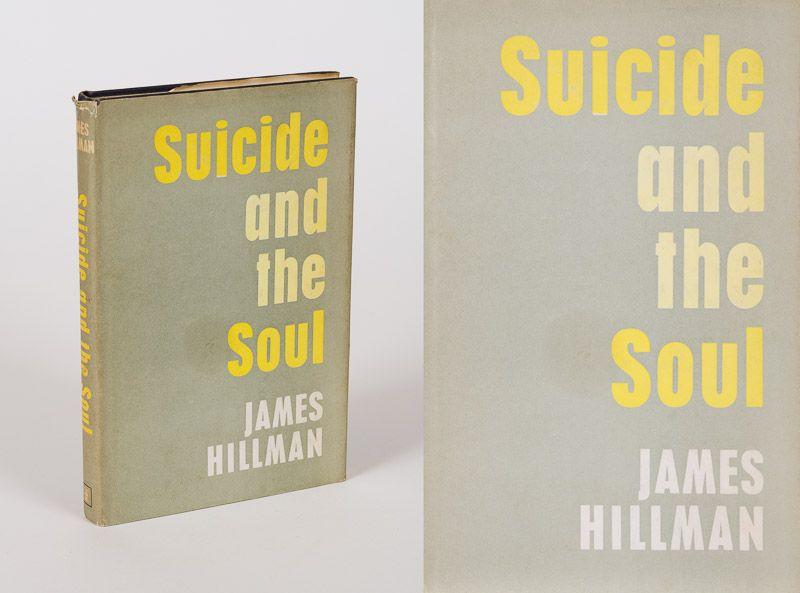
My friend mentioned she was reading Suicide and the Soul by James Hillmann, which looks at how our soul – which is eternal – acts in the face of Suicide.
In Norwegian Wood Murakami talks of Death. Specifically suicide. The narrator tries to make sense of the passing of his best friends,
Death exists, not as the opposite but as a part of life. By living our lives, we nurture death.”
Norwegian Wood Huraki Murakami
This seems like a cliche. But surrounded by his other words and the intense feelings of the narrator, it stands out.
The memories would slam against me like the waves of an incoming tide, sweeping my body along to some strange new place- a place where I lived with the dead. Death in that place was not a decisive element that brought life to an end. There, death was but one of many elements comprising life.
I felt no sadness in that strange place.
Norwegian Wood Haruki Murakami
It gives the overall impression Murakami had deeply considered death.

It also has anger. The kind of anger that is very believable.
Where the dialogue in this novel sometimes feels unrealistic, the parts about Death are the opposite.
Once upon a time, you dragged a part of me into the world of the dead, and now Naoko has dragged another pat of me into that world.
Norwegian Wood
This is the characteristic anger that often affects the family affected by a suicide. You often hear the left-behind use the word ‘selfish’ to describe such acts.
My friend however, was just trying to understand how his soul would find peace. Especially because, at the end, he seemed in such a frantically destructive mode.
I hope his soul is at peace now.
Without meaning it to be, I suppose this post is an ode to you Mr Green. May your spirit make sense of the afterworld better than you could make sense of this one. As Murakami called it, “this imperfect world of the living.”
 An Englishman in Hanoi