

Recently, one of the fellow students on my course decided to leave Groningen in the Netherlands to return home. This was by no means a strange occurrence, the main difference here however, was my friend was returning to Bergamo, the epicentre of the pandemic in Italy.
With the world standing on a strange precipice right now, many students have been frantically returning home, or desperately trying too.
One of my friends abroad recently graduated, having to enjoy the celebrations virtually. Here’s to spilling the champagne all over your laptop, as you strain a virtual smile to the Dean of your faculty. Japan even have iPad’s doing the job for us. The world of automation has finally come to good fruition. All we ever needed was a pandemic.

My aforementioned friend wrote a very moving Instagram post about leaving Groningen, so I set out to understand his point of view. I wanted to hear what had lead to this decision; were his fears grounded in reality; the different responses from the two respective countries; and finally if he would be able to keep studying at such a time.
In advance, thank you Andrea.
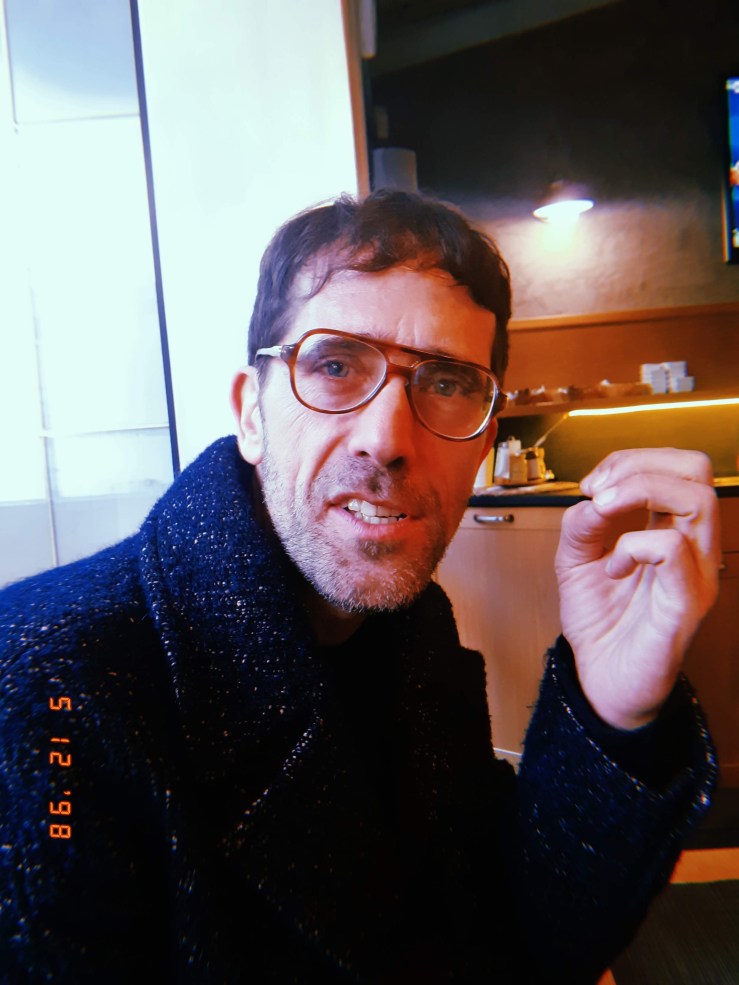
Andrea, Student at The University of Groningen
Hello Andrea.
I know you’ve recently decided to leave Groningen and return to Italy.
I hope to ask you some questions and in turn have a conversation which others around the world will hopefully find enlightening at this troubling time. You are an International Student studying International Relations at Groningen, and I thank you for your insights.
So with that, let’s begin;
With the current global situation still escalating in some countries, whilst slowing in others, it made me think that perhaps the course currently feels irrelevant.
Can you tell me, under the current circumstances – and taking into consideration the fact that the course has a focus on Globalisation – do you feel the course is irrelevant? Or is it the opposite, is it more relevant than ever?
A: I don’t think the course of study is irrelevant. On the contrary, I believe that this global pandemic demonstrates that on certain issues, in this case health security, it is essential for the future to have well-structured prevention plans at the global level. Certainly for those like us who are still students, and that now find themselves in the position of approaching the world of work in this period, this international context of crisis does not help. As you know we have a mandatory internship in the course, and probably given the circumstances it will be very complex to find one.
Nevertheless these are two different discourses: now it is certainly more difficult to find a window to enter into the field of work. Nevertheless I don’t think that the sector has become irrelevant. There are still much things that need to be done, probably even more than before.

You mention in your post that you see the University as a representation of your commitment to reach your goals. Considering what has happened, do you feel your goals have been put on hold somewhat, or do you still feel invigorated and motivated to work?
A: Certainly the University of Groningen, at least for me, has a deeper meaning rather than representing just a simple academic path: I see it as the representation of the way that I want to follow to achieving my future goals.
The current situation does not change my goals. And it doesn’t change my motivation either.
But it can certainly make these goals more difficult to achieve. For example, as mentioned above, in our course we have a mandatory placement; that part of the course has always been the one that intrigued me most.
I could not wait, and still can’t wait, to get involved in an international working context linked to my field of study.
This pandemic obviously slowed down the application procedures, possibly even making them disappear completely.
Surely this will have an impact on several students of our course who will have much more difficulty in finding an internship.
Like everyone else I will have to try to do my best to overcome these new and unexpected difficulties that the world has put in front of our face.

To recap, you recently left Groningen to fly back to Italy. Could you explain your decision, or the main focus of your decision?
A: My decision arose mainly from the desire to spend this period at my home in Bergamo, with my family. Primarily because I believe that being close to your beloved ones is important in such a complicated period.
Moreover, given the online nature that courses will have for the whole semester, I decided to return to Italy also to save money on the rental price – which I obviously don’t pay anymore – since my presence in Groningen become quite superfluous.

Was there any resistance to your decision to head back to Bergamo, knowing that it was particularly hard-hit by the pandemic?
A: No, on the contrary my family was pushing a lot for my return.
Furthermore you have to consider that I came back when, although the situation was still serious, the worst crisis in Bergamo was already passed.
Having now returned to Bergamo itself to see your family, can you comment on the atmosphere upon returning? Has it been a difficult transition?
A: Personally now that I am at home with my family I am experiencing a good atmosphere. We are all happy to be together and we are enjoying the beautiful sunny days being out in our big garden, trying to make the most of this period of “forced rest” at home.
But I have to say that surely arriving in Italy you can breathe a much more serious and heavy atmosphere regarding the pandemic.
In Groningen, on the whole, the situation has always remained quiet and almost normal. In Italy on the contrary no, especially in Bergamo the people have suffered a lot – with death rates 10 times higher than normal.
The impact I had with the scrupulous controls in the airport, with deserted highways and with a life that seems to have stopped completely, with people locked in houses, is certainly strong and makes you think a lot.
However now the situation is slowly improving, people are pushing for the possibility of going out more and more.
There is a bit of a division in the society between those who would like to reopen as much as possible and those who still have in their heads the images of the coffins leaving Bergamo on military vehicles, and therefore are more cautious and call for attention.
We are in a period of transition, as most of the world, with which we still have to deal.

How has it been experiencing two different sides of the lockdown, from Groningen and now Italy?
A: In Groningen I could go out without problems, meet with 3 friends and spend a nice afternoon in the park. The only real measure was keeping the 1.5 m distance.
Of course the bars and restaurant were all closed, but still the life was quite enjoyable.
To make you understand, in Groningen if you went around with a mask you felt observed, judged almost as you were doing something exaggerated.
In Bergamo the masks are mandatory.
These are two uncomparable situations.
The response to the Pandemic has differed from country to country. Some responses have been praised, others have been criticised. Knowing what you know about the Italian government, can you tell me your feelings on their response? Is there any resentment from the local people?
A: I can certainly say, that especially in Lombardy there have been serious shortcomings by local politicians who initially underestimated the seriousness of the problem. The Bergamo area should have been closed much earlier, and separated from the rest of the region. This was not done for economic interests, since Bergamo is one of the most productive and economically rich provinces of the whole nation.
This “not-done” closure has certainly had terrible repercussions on the population. Lombardy alone has nearly 10% of Covid’s worldwide deaths – someone has to take responsibility for these deaths.
There is therefore surely a big resentment in the local population.
Then the government did what was necessary to deal with the horrendous situation that came into being, so they blocked the entire country.
On the long term this will have huge economic implications, and the national public debate is now touching on this point a lot.

Thank you for your time Andrea.
One final thing would be to ask what your plans are going forward and what you envision for yourself after a semblance of normality returns to the world?
A: I personally aim to finish the Master lessons as soon as possible, so then I can focus solely on the internship.
Of course I would like to start to work later, but I will see what will be possible.
Thanks to you Tom.
So there we go. Thanks again Andrea.
This begins a new series I will be dedicating to talking to students.
At a time like this, it’s imperative to hear these personal accounts of hardship, so once the dust settles, we realise that we came together to triumph over adversity. Where the human spirits lies, the human spirit will prevail.
 An Englishman in Hanoi